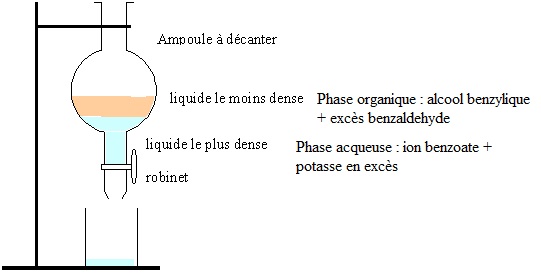
|
Synthèse de Cannizzaro, bac Métropole 2021. En poursuivant votre navigation sur ce site, vous acceptez l’utilisation de Cookies vous proposant des publicités adaptées à vos centres d’intérêts. ..
..
The is more than just a machine; it is a mechanical embodiment of a pivotal era in agricultural history. Produced between 1972 and 1977 as part of the "Unified Series" (UŘ I), this tractor represented a shift toward standardization and reliability that empowered small-scale farming across Europe and beyond. The Philosophy of Design The 4712 was exported worldwide, becoming a staple in markets ranging from Ireland to Australia, proving that good engineering transcends political and geographic borders. The Sensory Experience of Utility Zetor 4712 In an age of "planned obsolescence," the Zetor 4712 stands as a silent protest. Its continued presence in barns and fields today highlights a growing desire for . It reminds us that progress is not always measured by the number of sensors in a cabin, but by the reliability of the tool in the hand of the worker. The 4712 didn't just plow fields; it built a legacy of mechanical honesty. The is more than just a machine; it The "Unified Series" was a groundbreaking concept by the Czech manufacturer. The goal was to create a range of tractors (like the 4712, 5711, and 6711) that shared a significant percentage of parts. This modularity was a "deep" innovation for its time: The Sensory Experience of Utility In an age It lowered the cost of repairs and made spare parts easier to find. At its core, the 4712 is a study in utilitarian elegance. While modern tractors are defined by their electronic complexity and digital interfaces, the Zetor 4712 is defined by its transparency. Every bolt and lever serves an obvious purpose. This accessibility turned farmers into mechanics, fostering a culture of self-reliance. Its —a 3-cylinder, liquid-cooled diesel—offered about 45 horsepower, a modest figure by today’s standards but a revolutionary step for a 1970s farmer transitioning from animal labor or smaller, less stable machinery. Historical Context: The Unified Series To understand the Zetor 4712 is to understand the sensory reality of the field. It is the rhythmic, heavy "thrum" of the 3-cylinder engine—a sound that signaled progress and hard work. It is the physical feedback of the manual steering and the distinct smell of diesel and warm iron. For many, this tractor is a "bridge" between generations, often passed down from grandfather to grandson, carrying with it the history of the land it tilled. Legacy and Modern Reflection
|
||||||||
|
|
||||||||